Summer

Seasons in Maine

Overall climate of the state is humid continental. However its northern regions are colder although winters are cold and snowy through its whole territory. Weather on Atlantic coasts is molder. Impact of the ocean makes summers cooler and winters warmer.


Seasons in Washington

The state of Washington is located in the northwestern United States and has the largest city of Seattle. Climate of the state varies greatly from pacific coasts on west to Cascade Mountains on east. Coastal regions are having oceanic weather conditions with average annual temperature of 52 °F (+11 °C) and greater amount of precipitation. Regions on east side of the mountains are much drier and colder with average annual temperature of 39 °F (+4 °C).

Seasons in Michigan

The state has continental climate with high humidity. 11 000 lakes of Michigan state (over 40% of territory of the state) are influencing its weather. Southern regions are warmer with annual range of temperatures between 18-82 °F (-8 and 28 °C). Northern part is colder with 3-75 °F (-16 to 24 °C) of annual temperatures. Northern summer is shorter.

Seasons in California

California it the most populated and third biggest state in the United States. It is situated in western part of the country and washed by the Pacific Ocean. Relief of the state varies greatly. Central part of the California is vast Central Plain surrounded by mountains: Pacific Coast Ranges on west, Sierra-Nevada on east, Cascade Range on north and Tehachapi Mountains on south. Also there are desert in south-eastern part of the state.

Seasons in Hawaii

Climate of the Hawaii islands is formed by trade winds. Due to their influence precipitation falls mostly in northern and eastern sides of islands. Coastal areas in south and west are drier. Because of trade-winds and potential torrential rains most of resorts are located on the leeward coasts of the islands.

Seasons in New York City

New York has subtropical oceanic type of climate. Precipitation is evenly distributed through a year. Despite coastal location difference between ranges of temperatures of summer and winter is significant due to prevailing inland air masses. Impact of the ocean is secondary yet it smoothen shifts of temperature. Another key factor is dense urban development which causes microclimate with higher average temperatures.

Seasons in Los Angeles

The city lies within zone of subtropical climate. It similar to Mediterranean climate but through whole year temperature never drops below 50 °F (10 °C) thus it considered as tropical. A year is actually divided into two seasons: wet (November-March) and dry (April-October). Weather conditions in certain region of Los Angeles are depending on distance to the ocean. Difference of temperatures may reach ≈27 °F (15°C).

Seasons in Chicago

The city lies within the zone of moderate continental climate thus season are pronounced here. However movement of air masses from the Michigan Lake makes weather tricky. Winters are rather cold with frequent snow. Average temperature of the season is about 30 °F (-1 °C) but due to high humidity it may seem colder. Moreover there are occasional snowfalls and severe cold with -4 °F (-20 °C).

Seasons in San Francisco

The city has Mediterranean climate with mild rainy winters and warm dry summers. San-Francisco is located on the peninsula of same and surrounded with water on three sides thus weather is influenced by cold currents. Average summertime temperatures are in range between 59-75 °F (15 and 24 °C) while at winter they are between 50-59 °F (10 and 15 °C).

Seasons in Miami

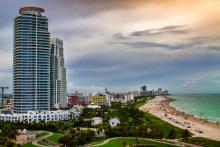
Tropical monsoon climate of Miami divides a year into two seasons. Span of first of them is between April and October. At this time average highs are between 30 and 86-91 °F (33 °C) and there are occasional showers occurring mostly at early morning or late nights. And even if it rains at day there are no slush and mud. Noon showers are bringing pleasant cool instead. However heat seems to drive off most of tourists.

Seasons in London

The capital of Great Britain lies within zone of moderate maritime climate which causes high humidity and legendary fogs. Precipitation is almost evenly distributed through a year. And though its amount may seem humongous actual numbers aren’t as big. Annual amount of precipitation in London is about 610 mm (24”).

Seasons in Birmingham

The climate here, as in all of England, is quite mild and humid. Summer is never hot here - the average summer temperature in July (considered the warmest month in the year) is +16 ºC. So you can’t sunbathe here. In winter there is almost no severe frost - the average winter temperature in January, the coldest month of the year, does not drop below +3 °C. The climate is characterized as a moderate sea - yes, it’s unpleasant, but moderately.

Seasons in Liverpool

Hello people! Today well tell you about the weather in Liverpool. For this English city is characterized by a temperate oceanic climate: in summer the city is warm, but not hot, the average temperature in July is from +17 to +20 °С.

Seasons in Oslo

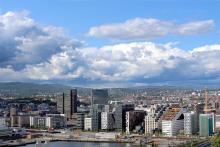
Oslo has maritime climate. Summers are cool and winters are rather mild and snowy while autumn is long and spring comes only by late March. Severe frost or exhausting heat is not common in the city. This is peculiar considering closeness of the Polar Circle.

Seasons in Bergen

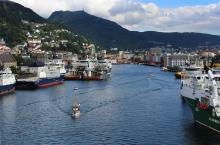
Bergen is almost thousand years old city with pronounced northern maritime climate. Two main features of the climate of Bergen are mild transitions between seasons and excessive amount of precipitation.

6 Best Resorts in Norway

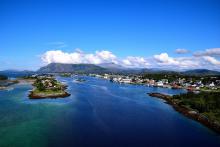
Norway is located on the same latitude with Alaska, Greenland and Siberia yet climate of the country is milder. Warm air masses from above the Gulf Stream are forming mild climate of coastal areas of Norway. Inland and north most located territories are colder and drier.

Norway Nature

Norway is located on mountainous land. Most of it lies in moderate climate zone however its climate is milder than in other countries on same longitude at least in southern portion. Western regions of Norway are under influence of warm Atlantic currents, while south-eastern part falls under air masses from above the Baltic Sea.

Best Time to Visit Norway

The territory of the country is stretched northwards and narrow. Such configuration causes variety of weather condition. Southern and south-western portions are falling under influence of the Gulf Stream and North Atlantic Current hence having moderate maritime climate. Winters there are cold with temperature averages slightly below freezing and summers are cool.

Seasons in Stockholm

Climate of Stockholm forms under influence of the Gulf Stream. Hence there are no severe frosts or exhausting heat.

Seasons in Gothenburg

Gothenburg is located on the coasts of the Kattegat Strait of the North Sea and its weather conditions are formed under direct influence of the Gulf Stream. Hence there are exceptionally mild seasons with smooth transitions.

Pages

Comments